The Client
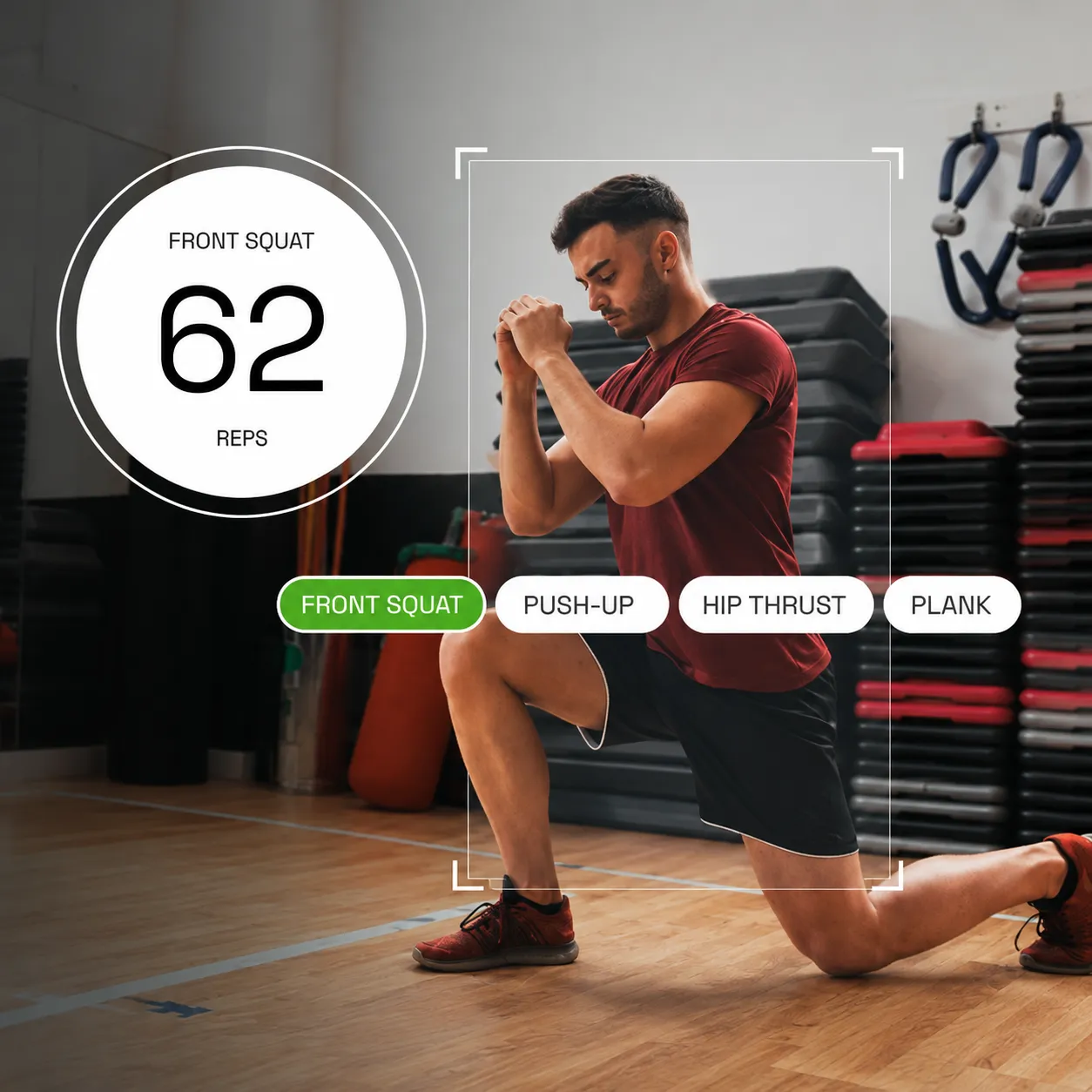
A generative AI company building systems that recognize and interpret human physical activity from video engaged Hugo to produce the structured training data behind its models. The system identifies exercises, counts repetitions, and tracks weight-handling behavior from raw footage of a single subject, making annotation precision critical to the reliability of its outputs.
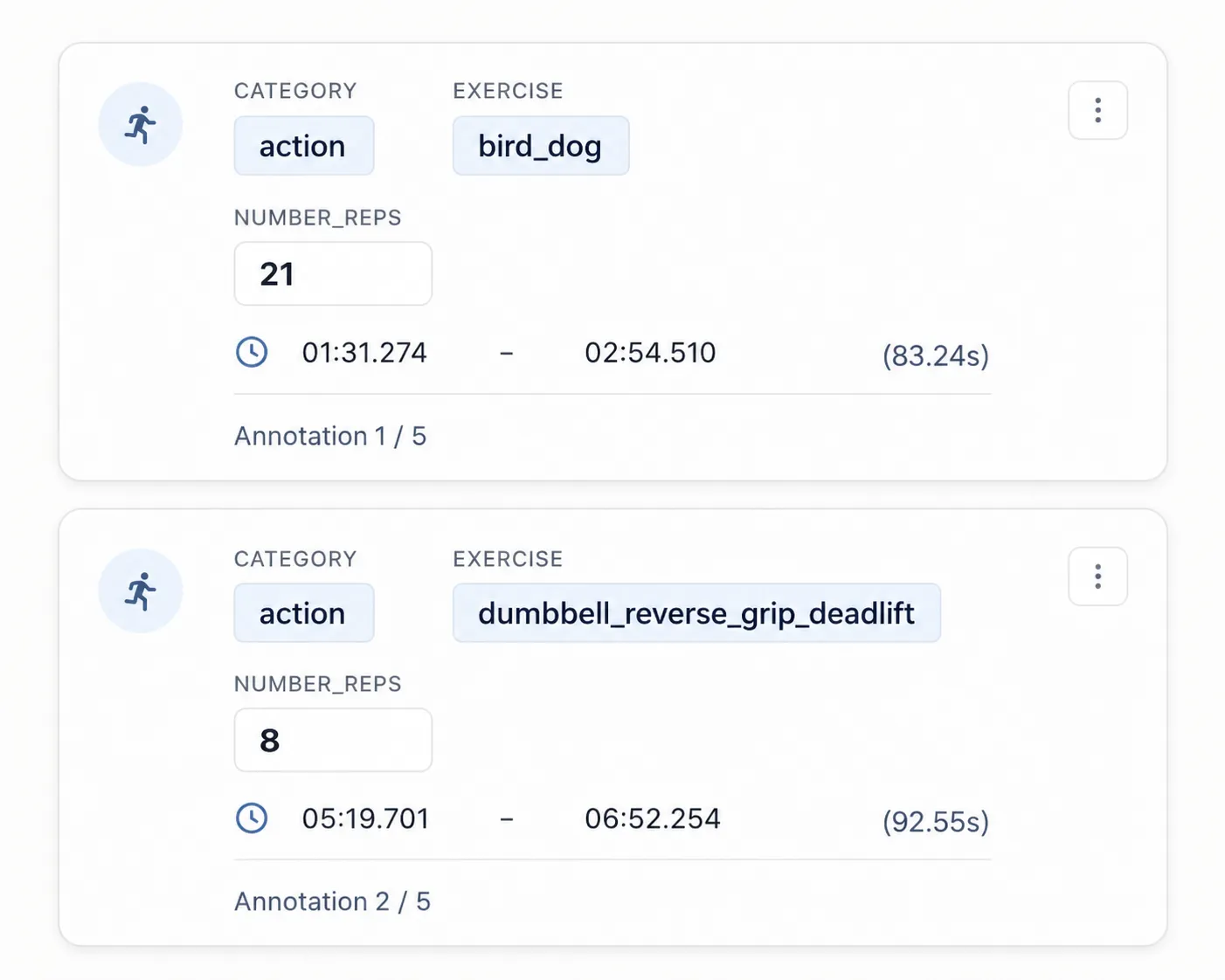
Each video had to be segmented by exercise activity and labeled with the correct exercise type, repetition count, and weight-interaction details, across a library of more than 70 movement types spanning dumbbell, barbell, kettlebell, and bodyweight exercises.
Partnership at a Glance
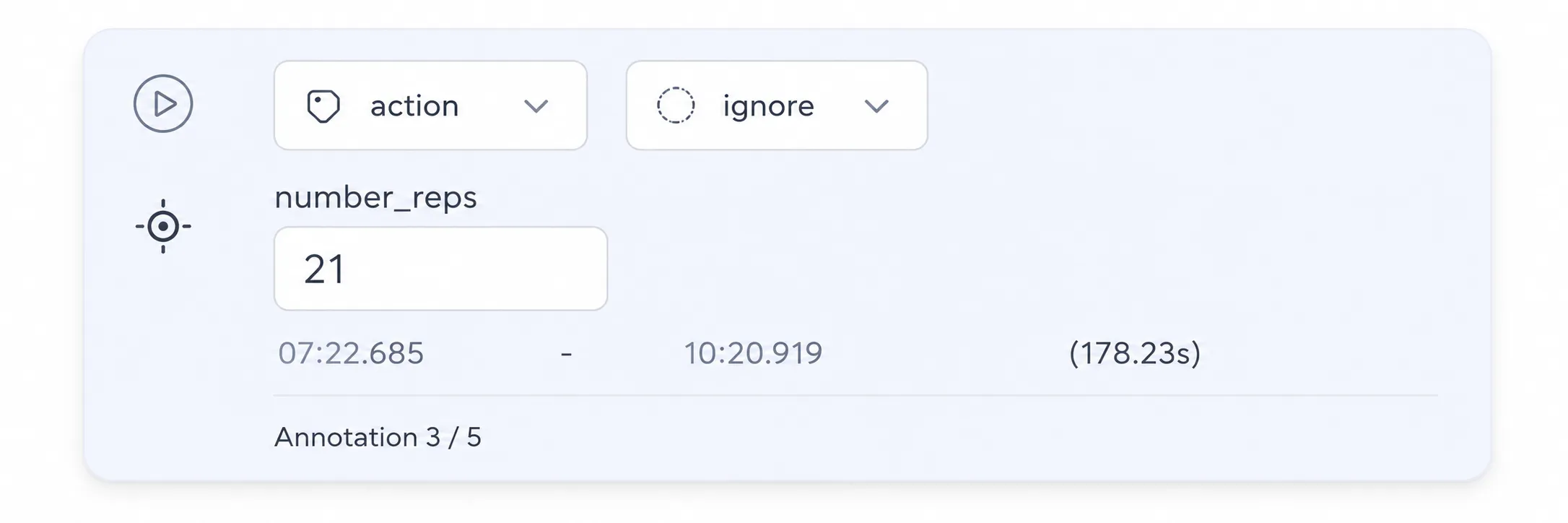
- Operational Scope: Two annotation workflows: frame-accurate segmentation of each exercise, and detailed labeling of exercise type, repetition count, and weight handling.
- Precision Standard: Segment boundaries placed within a ±30-frame tolerance to protect every downstream labeling step.
- Quality: 95% overall quality against a 90% target, sustained across two production phases.
- Efficiency: Average handling time of 2,701 seconds against a 3,600-second target, approximately 25% faster than target.
- Library Breadth: Consistent identification across 70+ movement types, including visually similar variations.
- Quality Model: Structured certification, frame-level review discipline, embedded edge-case rules, and dual-cadence quality monitoring.
The Challenge
The client needed reliable training data for AI models designed to recognize exercises, count repetitions, and interpret weight-handling behavior from video. Producing that data required far more precision than standard video annotation.
- Distinguishing between highly similar movements: The exercise library spanned 70+ movement types, including variations that could look nearly identical on video. Curl variations, lunge types, and other overlapping movements had to be differentiated accurately to prevent incorrect labels from entering the training data.
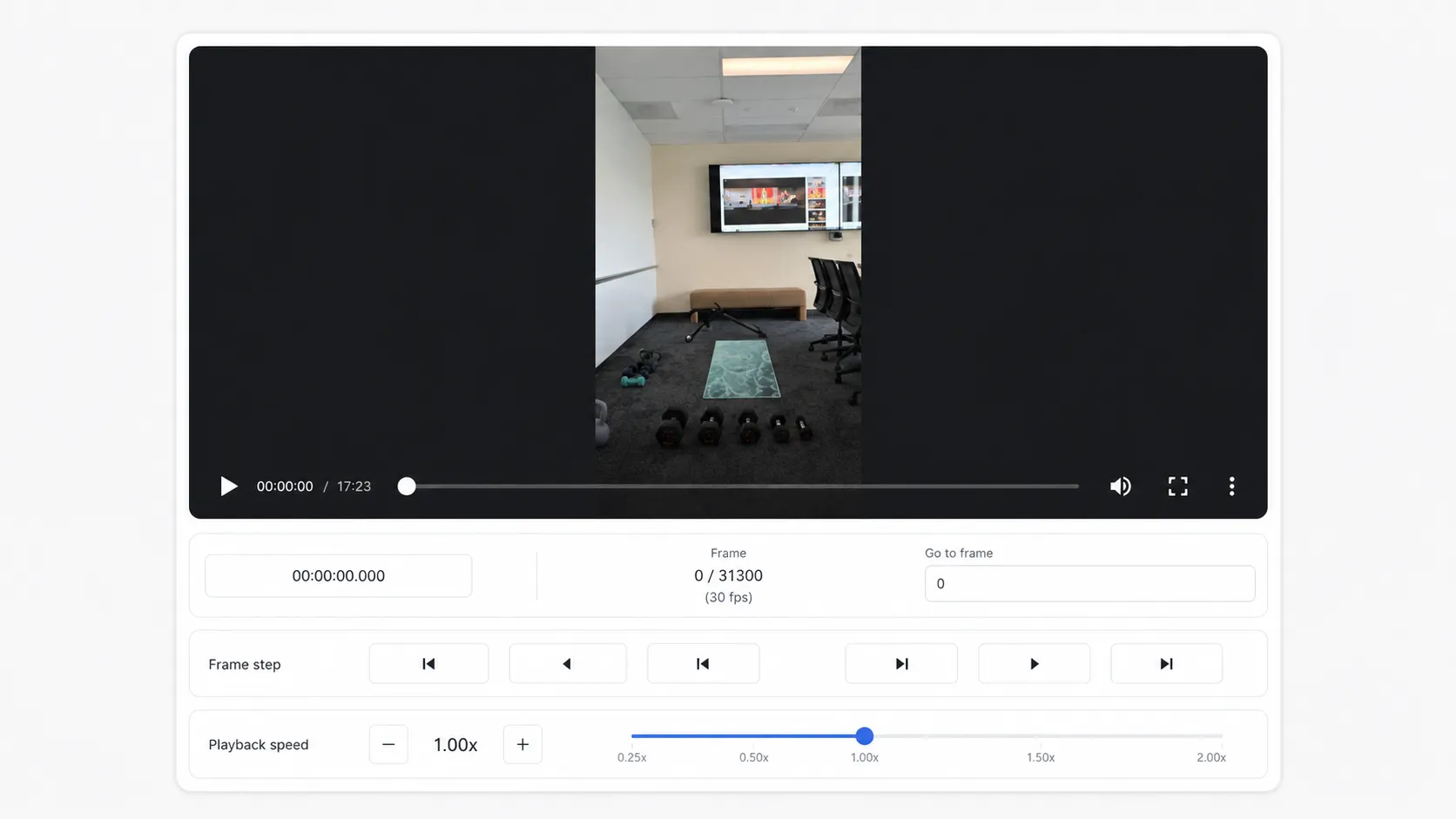
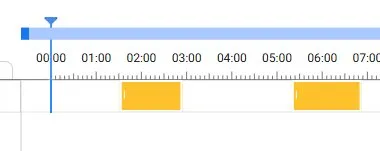
- Defining exercise boundaries with frame-level precision: Each exercise segment needed precise start and end points within a tight frame tolerance. Inaccurate boundaries could carry errors into downstream labeling and reduce the reliability of the resulting training data.
- Creating consistency where the video alone wasn't enough: Some scenarios were inherently ambiguous: weights could be obscured, wristbands difficult to identify, subjects could rest weights on their legs, or footage could capture the transition between picking up and putting down equipment. The client needed these edge cases handled according to clear, repeatable rules so similar situations produced consistent labels across the dataset.
Meeting this consistently was the real challenge.
Hugo's Approach
Hugo designed the annotation operation around the client's three core requirements: accurately distinguishing similar exercises, maintaining frame-level segmentation precision, and applying consistent judgment to ambiguous cases. A dual-cadence QA system reinforced all three throughout production.
Structured Training and Certification
To reduce misclassification across the client's 70+ movement types, specialists trained on the full exercise library, segmentation tolerances, labeling workflow, and defined edge-case rules before entering production. Each specialist then passed a project knowledge assessment at an 80% threshold.
Targeted calibration focused on the movements most likely to be confused—including curl variations, lunge types, and other visually similar exercises—giving specialists repeated practice distinguishing the differences that mattered to the training data.
Frame-Level Precision in Segmentation
To protect the accuracy of downstream labels, segment boundaries had to fall within ±30 frames per edge. Specialists were trained to treat boundary placement as a deliberate validation step and verify every segment against the tolerance before submission.
Any job that failed the segmentation standard was rejected rather than passed downstream, ensuring subsequent labeling started with pre-validated inputs.
Consistent Edge-Case Handling
To prevent ambiguous footage from producing inconsistent labels, edge-case rules were built directly into calibration materials and reinforced through daily review.
Specialists applied established ignore flags and exclusion rules as first-line actions for known scenarios, while escalation was reserved for genuinely novel cases. This created a repeatable decision framework for situations where the correct label wasn't obvious from the video alone.
Dual-Cadence Quality Assurance
To keep these standards consistent throughout production, Hugo paired daily internal audits with weekly client benchmark reviews. Daily audits surfaced error patterns and scoring drift early, triggering targeted coaching where needed. Weekly client feedback provided an external calibration point and was incorporated into the next review cycle.
Together, these feedback loops helped prevent individual errors or judgment drift from becoming systemic issues across the dataset.
The Results
Hugo exceeded both quality and speed targets across a precise, small-team engagement.
| Metric | Result |
| Annotations delivered | 1,686 across both workflows |
| Overall quality | 95% (target: 90%) |
| Average handling time | 2,701 sec (target: 3,600 sec), 25% faster |
Inside the Annotation Workflow

Where This Sits in Hugo's Evaluation Stack
MetaLift was frame-accurate video segmentation and labelling for activity recognition. It is part of Omni Evals, Hugo's human evaluation practice for frontier models.