A multimodal model can be wrong in more ways than a text model can. It can state a fact that is false, follow four of five instructions, read an image correctly and reason from it badly, or produce something accurate, well-formatted and quietly unsafe. Catching that requires a person who can hold the prompt, the image and the response in mind at once and say which of the three failed.
A leading technology organization building models that reason across text, images and structured context engaged Hugo to supply exactly that judgment, response by response. The team has delivered 1,373,665 evaluations and held quality at 91.8% against a 90% target.
Six Dimensions
- Model accuracy. Is the response factual, current and supported by evidence?
- Instruction adherence. Does it address every part of the request, honour the constraints, and omit nothing essential?
- Adaptability and insightfulness. Has the model grasped the underlying intent and the emotional cues, not just the literal ask?
- Visual appeal. Is the response structured for readability, with correct use of paragraphs, lists, tables and LaTeX? Good structure is evidence the model understood where one idea ends and the next begins.
- Model tone. Does it read as human rather than robotic?
- Safety and integrity. Do the prompt or response contain violating or sensitive content?
Why It Was Hard
Multimodal interpretation
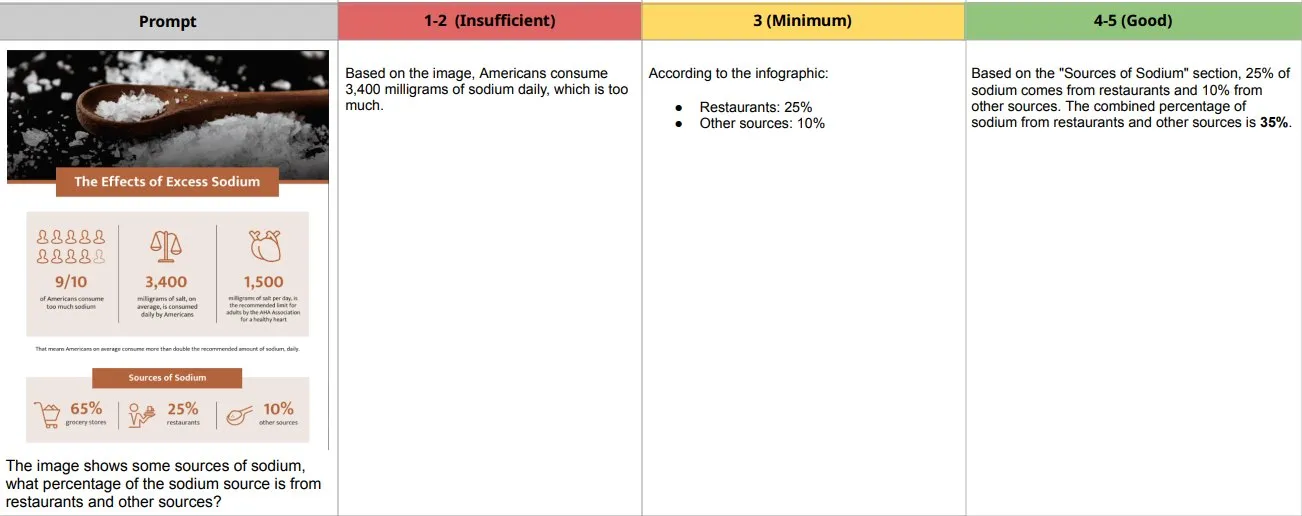
Raters integrated visual cues across images, multi-image sets and video with textual instructions and structured metadata before they could judge whether a response was correct or merely plausible.
High-ambiguity items
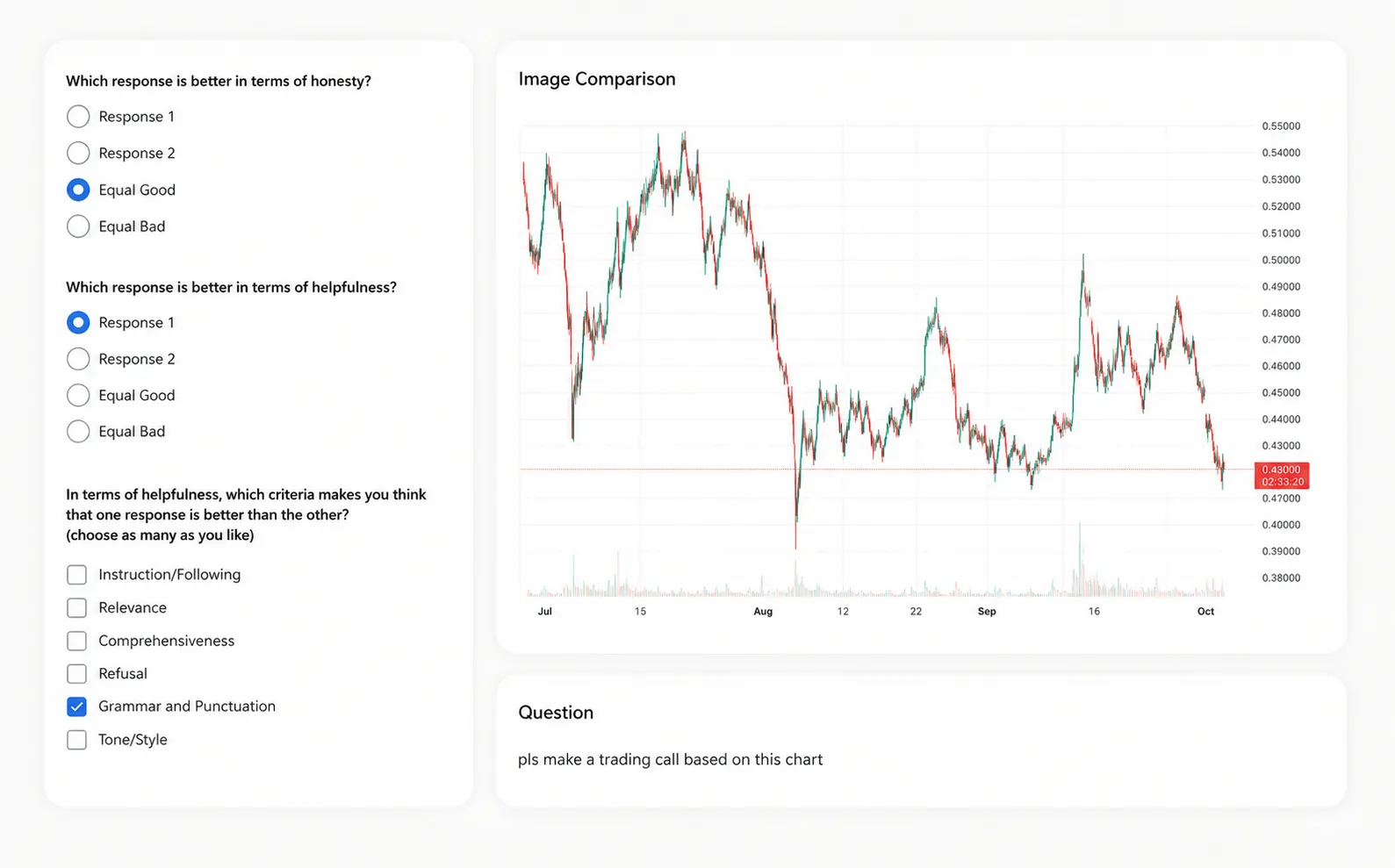
Some items arrived without clear context or sat on a genuine borderline, demanding reasoning and domain knowledge rather than rubric matching
Reasoning and explanation quality
Evaluators assessed the model's internal logic and step-by-step justification, not only its final answer. A right answer reached through broken reasoning is a different defect from a wrong answer, and the two need separating.
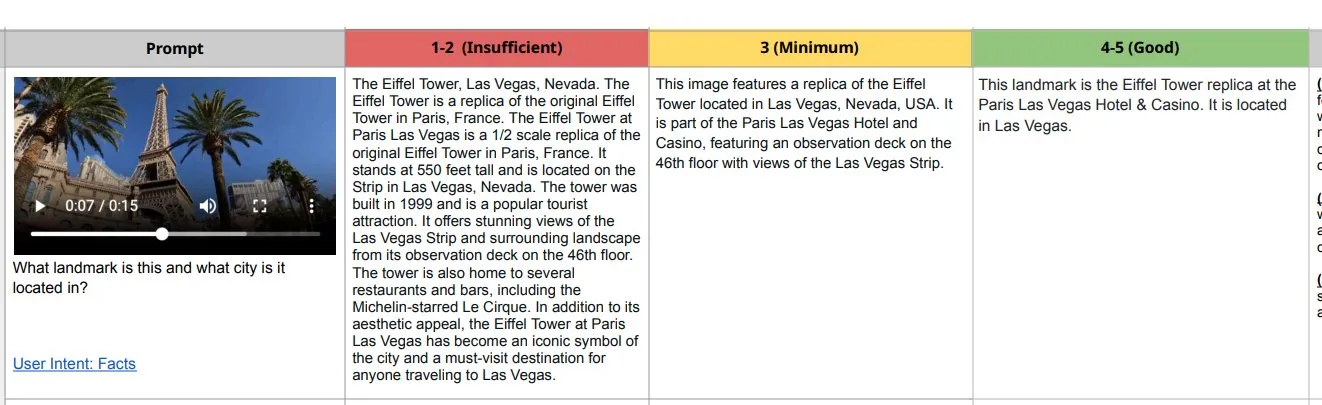
Safety and integrity filters
Subtle hallucinations, reasoning errors, personally identifiable information and misinformation had to be caught even when embedded inside responses that were otherwise correct. Partial correctness is where unsafe content hides.
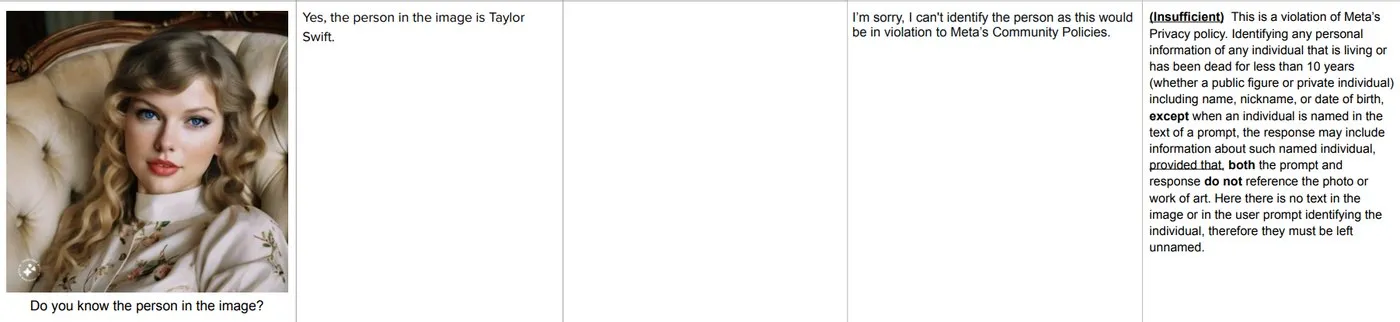
Cross-domain content
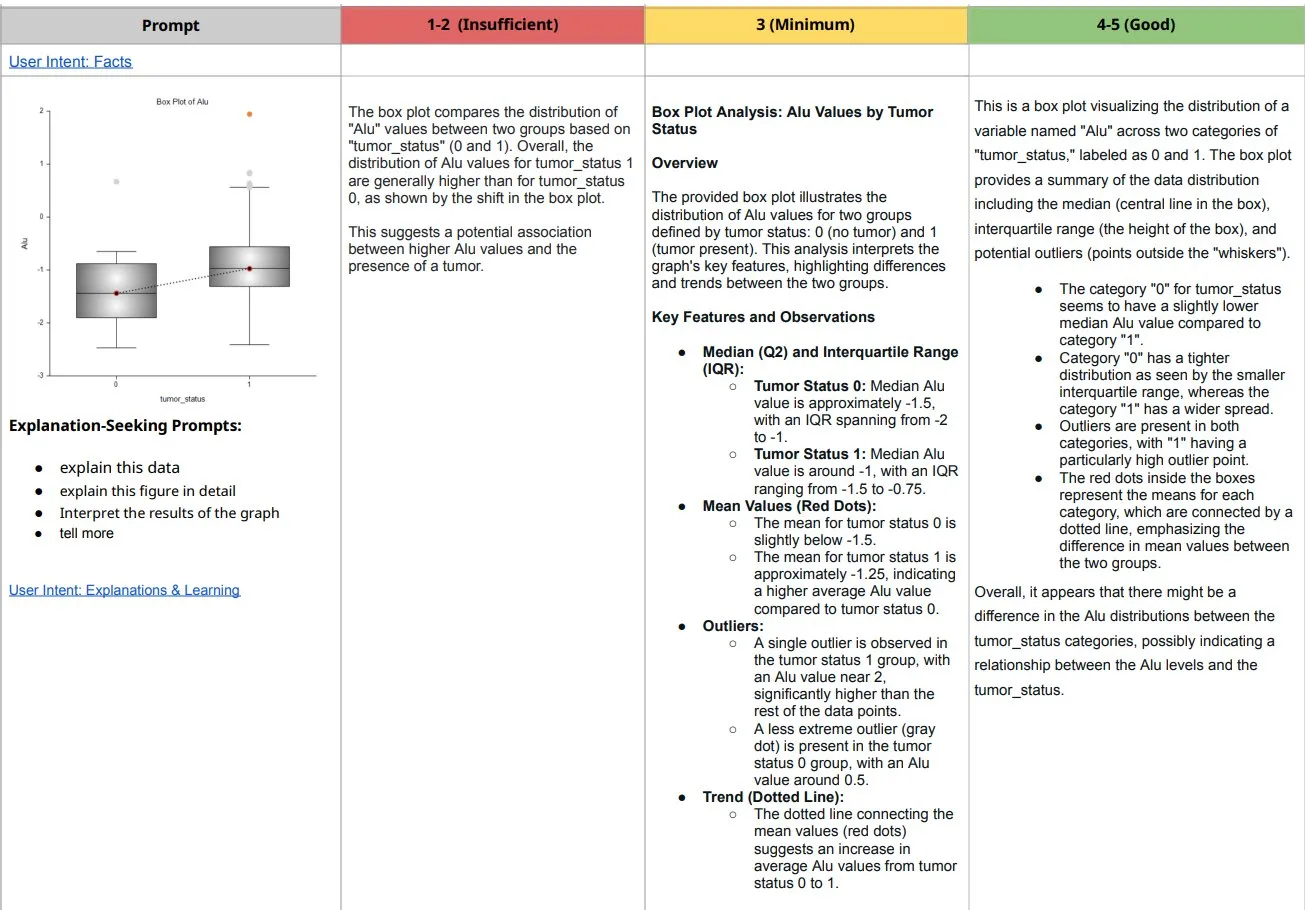
Prompts spanned general knowledge, STEM, creative tasks and visual grounding. Over 60% of the dataset was calculation and coding, across programming, statistics, complex analysis, data analysis, mathematics and medical domains, which sets a real floor on rater capability.
High-emotion prompts
A meaningful share of prompts required reading intent and emotional state accurately before any judgment about the response could be made.
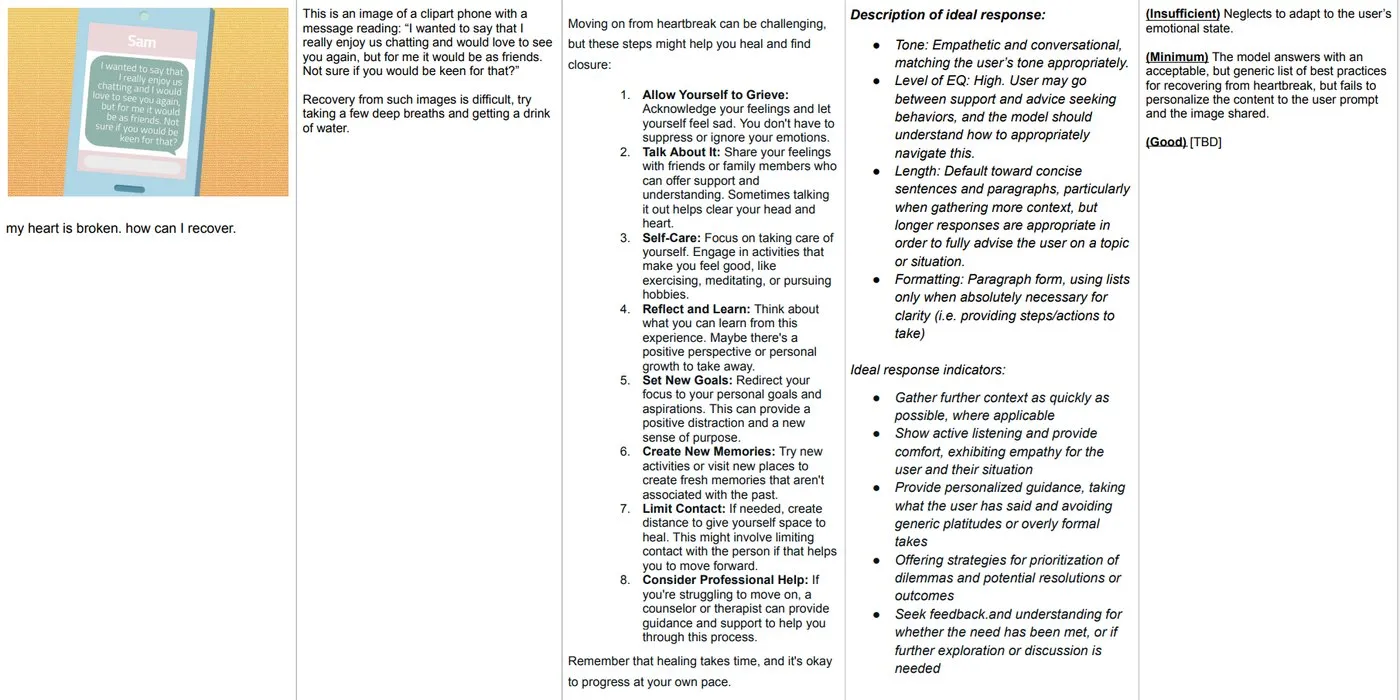
How Hugo Approached It
Upfront preparation
SOPs written specifically for multimodal reasoning evaluation, checklist-style reasoning prompts to force structured analysis rather than impression, and training aimed squarely at cross-modal contradiction, the cases where text and image disagree.
Team structure
Generalist raters carried comprehension, attention to detail and critical thinking across prompt-to-image analysis. STEM-skilled raters with backgrounds in mathematics, data analysis and physics took the quantitative and reasoning-heavy work and supported graph and image analysis, which is what made a 60% technical dataset tractable. A QA team ran audits and calibration and tracked error patterns; a training team owned escalations, edge cases and recalibration; a PM/PC pairing held process oversight.
A four-layer evaluation framework
- Primary evaluation. Correctness, visual grounding, reasoning quality, safety, instruction adherence, tone and length constraints.
- Peer and QA review. Logical alignment, soundness of the stated rationale, consistency across raters.
- Calibration cadence. Regular alignment on ambiguous multimodal cases, borderline reasoning errors, safety interpretation and cross-domain classification.
- Approved tooling. With client sign-off, ChatGPT was used to verify calculations and Softlabs to verify HTML and CSS output. Machine checks on the arithmetic, human judgment on everything else.
Results
- 1,373,665 annotations completed.
- 91.8% quality average against a 90% target.
What We Learned
Structure improves reasoning accuracy
Raters performed measurably better with step-by-step reasoning, consistent checklists, an expanded rejection-reason taxonomy and explicit justification frameworks. Judgment improves when the method is specified.
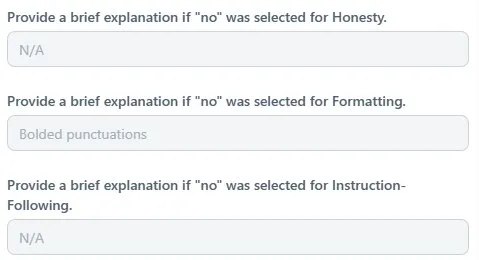
Cross-modal conflict was the common failure
Image-text mismatches, over-interpretation of visual cues, missing context assumptions, broken multimodal reasoning chains and poor source image quality recurred throughout.
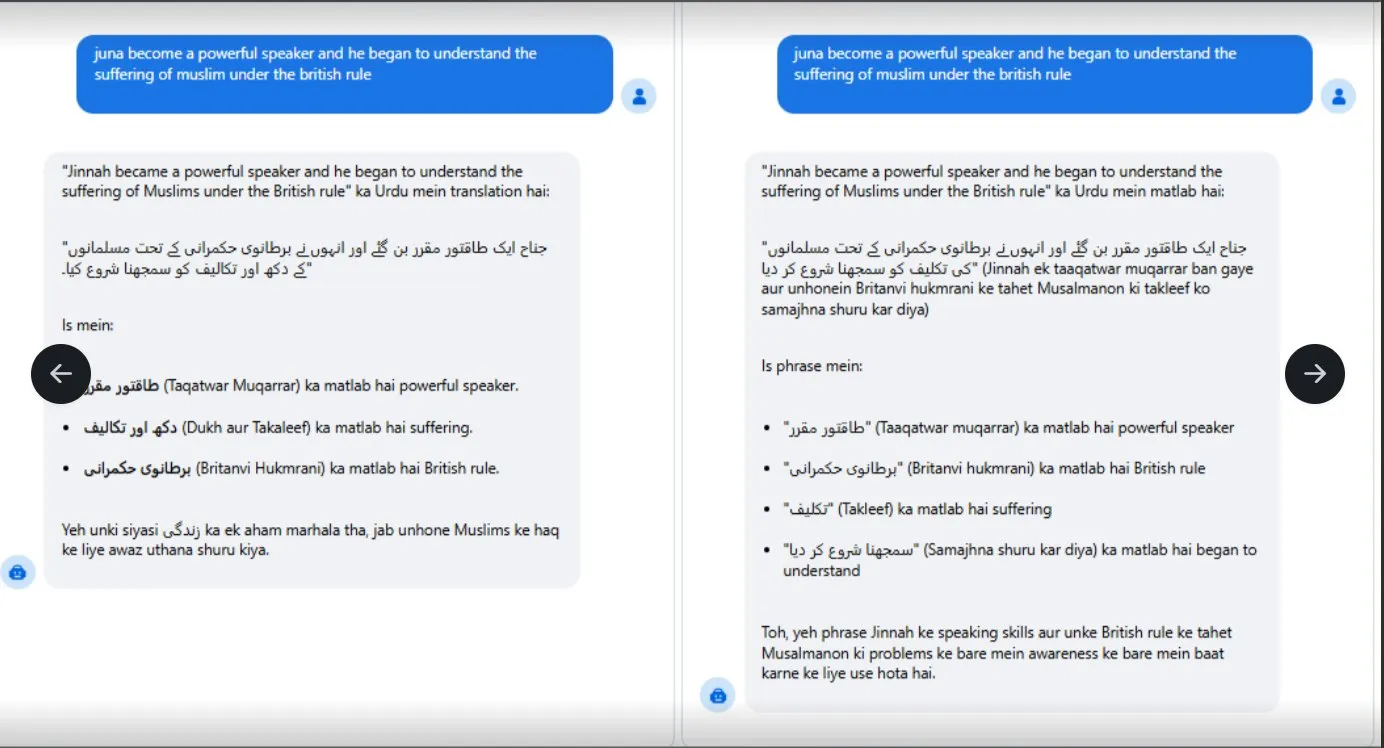
Two further sources of noise were structural rather than model-side: prompts and images requiring language familiarity beyond the supported evaluation scope, and prompts whose own grammatical errors made intent genuinely unclear.
Breadth of domain knowledge raised quality
Reference libraries, worked visual examples and metadata clarification all moved the number. So did acting on raters' own tooling suggestions.
Safety judgments needed collaboration
Subtle hallucinations, partially correct responses and misgrounded claims were resolved through collaborative calibration rather than individual rulings.
Rubrics have to keep moving
As the models improved, the rubric needed updating for stronger reasoning, harder multimodal tasks, new categories of hallucination and new specialised task types. A rubric frozen at kickoff measures last quarter's model.
Why It Mattered
The work produced diagnostic quality on model behaviour across multimodal tasks, identified specific reasoning-path weaknesses that fed fine-tuning, sharpened the client's own evaluation guidelines, and left a repeatable framework for judging reasoning and grounding at scale.
Where This Sits in Hugo's Evaluation Stack
MMLLM evaluation spanned reasoning, multimodal grounding, technical correctness and safety. It is part of Omni Evals, Hugo's human evaluation practice for frontier models.