"Alternative" Usually Means Different Fit, Not Simply a Better Vendor
Scale AI holds roughly 5.8% of the global data annotation and labeling market, putting it among the top players in a highly fragmented space. The company provides a broad AI data and evaluation ecosystem spanning labeling, generative AI data, RLHF, red teaming, evaluations, and multimodal annotation. So why consider alternatives?
Different AI teams have different priorities. Some need specialized contributor expertise. Others want direct management visibility into who performs the work. Many require integration with existing tools rather than adopting a new platform. Teams may also have geographic workforce requirements or commercial models that don't align with a particular provider's structure. And since Meta took a near-half stake in Scale AI, some labs also weigh who owns their data partner: see what a year of data shows after the Meta/Scale AI deal.
The question isn't whether Scale AI is good or bad. It's whether a given provider's capabilities, workforce profile, and delivery approach match what your specific AI program requires. Start with the operating requirement, not the vendor name.
Not Every Scale AI Alternative Uses the Same Delivery Model
Providers in this space fall into several categories, and understanding which type you need narrows the field considerably.
A managed human data partner provides a recruited workforce, project management, training, QA, and delivery. A data annotation platform focuses on tooling, workflow creation, and annotation interfaces, with varying levels of workforce support. A specialist evaluation partner emphasizes RLHF, model evaluation, coding evals, red teaming, or domain-specialist review.
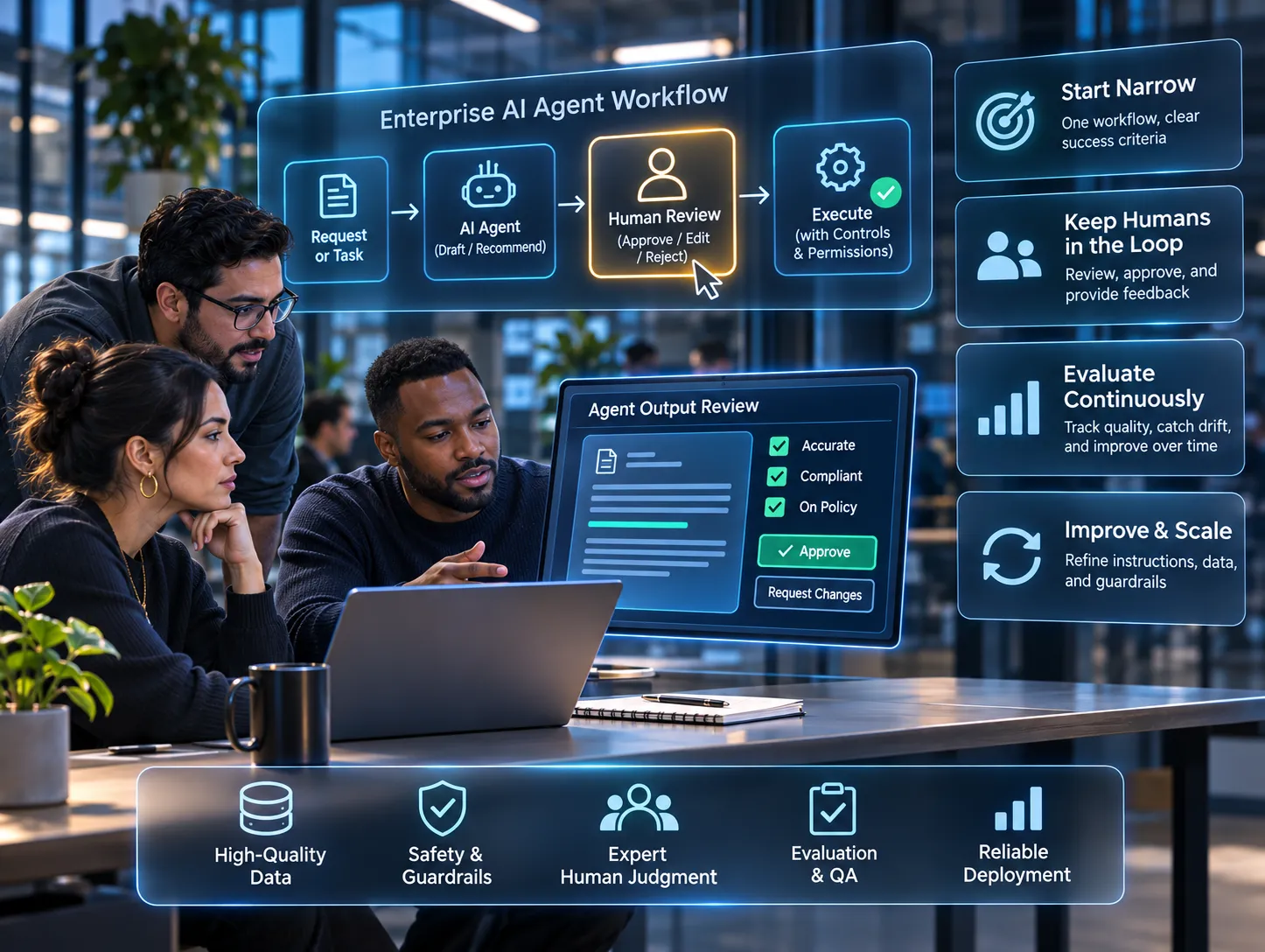
Many AI teams run an internal plus external hybrid, keeping tooling and evaluation design in-house while outsourcing contributor sourcing, execution, QA, and scaling. Before comparing alternatives, decide whether you need software, workforce, managed operations, specialist evaluation, or a combination.
Evaluate Who Will Actually Create or Judge the Data
Workforce expertise should be one of the strongest evaluation criteria. For straightforward annotation, well-trained general contributors may be appropriate. More advanced programs often require software engineers, mathematicians, scientists, multilingual specialists, or experienced evaluators with demonstrated domain knowledge.
Scale AI reports employing over 100,000 global contractors, with 25% holding advanced degrees. Other providers vary widely. The relevant question isn't "how many workers?" but "can this provider source and verify the specialists my tasks require?"
Ask How Contributors Are Qualified
What qualifications are required for specific task types? Are contributors tested before production work? Is expertise verified by domain? How are weak performers identified and removed?
Match Expertise to the Evaluation
Pairwise writing evaluation and repository-level coding-agent trajectory review should not use the same evaluator profile. For agentic and coding evaluations, reviewers may need to run code, inspect repositories, use terminals, or interpret mathematical reasoning. That's a different workforce than image classification requires.
Modern AI Partners May Need to Support Training and Evaluation
Traditional annotation procurement treated data labeling as a commodity input. Modern AI programs often need partners who can support the full model-development lifecycle.
Training data needs may include annotation, human-authored data, SFT datasets, and synthetic-data verification. Preference and post-training data spans response ranking, RLHF, and expert feedback. Model evaluation covers reasoning evaluation, multimodal evaluation, agentic evaluation, and benchmark creation. Safety work includes adversarial evaluation, red teaming, and jailbreak testing.
Scale itself markets capabilities across many of these areas. The evaluation should focus on depth and fit for your specific requirements, not whether a provider checks a generic capability box.
"The hardest part of evaluating AI data partners isn't finding one that says they do RLHF or coding evals. It's verifying that their operational machinery, from contributor qualification to QA to escalation, actually works at the complexity level your models require. A provider might handle preference ranking for simple responses just fine but struggle when the evaluation requires following multi-step reasoning through tool calls and error recovery."
Omorebokhae Sunny Ohimai, Project Manager, AI Operations
Ask How the Provider Knows Its Human Data Is Correct
Every vendor claims high-quality data. The useful question is: how is quality measured and maintained?
Potential mechanisms include qualification testing, gold-standard tasks, reviewer calibration, secondary review, consensus, expert escalation, adjudication, and contributor-level performance monitoring. The relevant quality metric changes by project: label accuracy for annotation, preference consistency for RLHF, execution verification for coding evaluation, cross-modal alignment for multimodal grounding.
Understand How Disagreements Are Resolved
The strongest QA systems have an escalation mechanism for ambiguous or technically difficult cases. When two qualified evaluators disagree on whether a coding agent's approach was correct, what happens next? The answer reveals a lot about operational maturity. To see how easily a rater can follow the task to the letter and still make the wrong call, try the ten cases in The Judgment Call, modelled on hard calls from Hugo's own projects.
Your Data Partner Should Fit Your AI Stack
Some organizations want a platform plus workforce bundled together. Others already have internal annotation tools, evaluation harnesses, or proprietary platforms, and primarily need a managed human layer that can operate within their existing environment.
A vendor-neutral AI data annotation partner can support human data or evaluation workflows without requiring every project to operate exclusively through one proprietary platform.
Questions to Ask About Tool Flexibility
Can the provider work inside your platform? Use third-party annotation tools? Interact with proprietary evaluation environments? Work in sandboxes? Deliver through APIs? Adapt to changing schemas?
Why This Matters for Frontier AI
Evaluation workflows can change quickly as teams move from response evaluation to reasoning traces to tool calls to agent trajectories. A rigid workflow can become outdated within months. The more rapidly the model stack evolves, the more valuable workflow flexibility becomes.
Advanced Models Require More Than Traditional Annotation
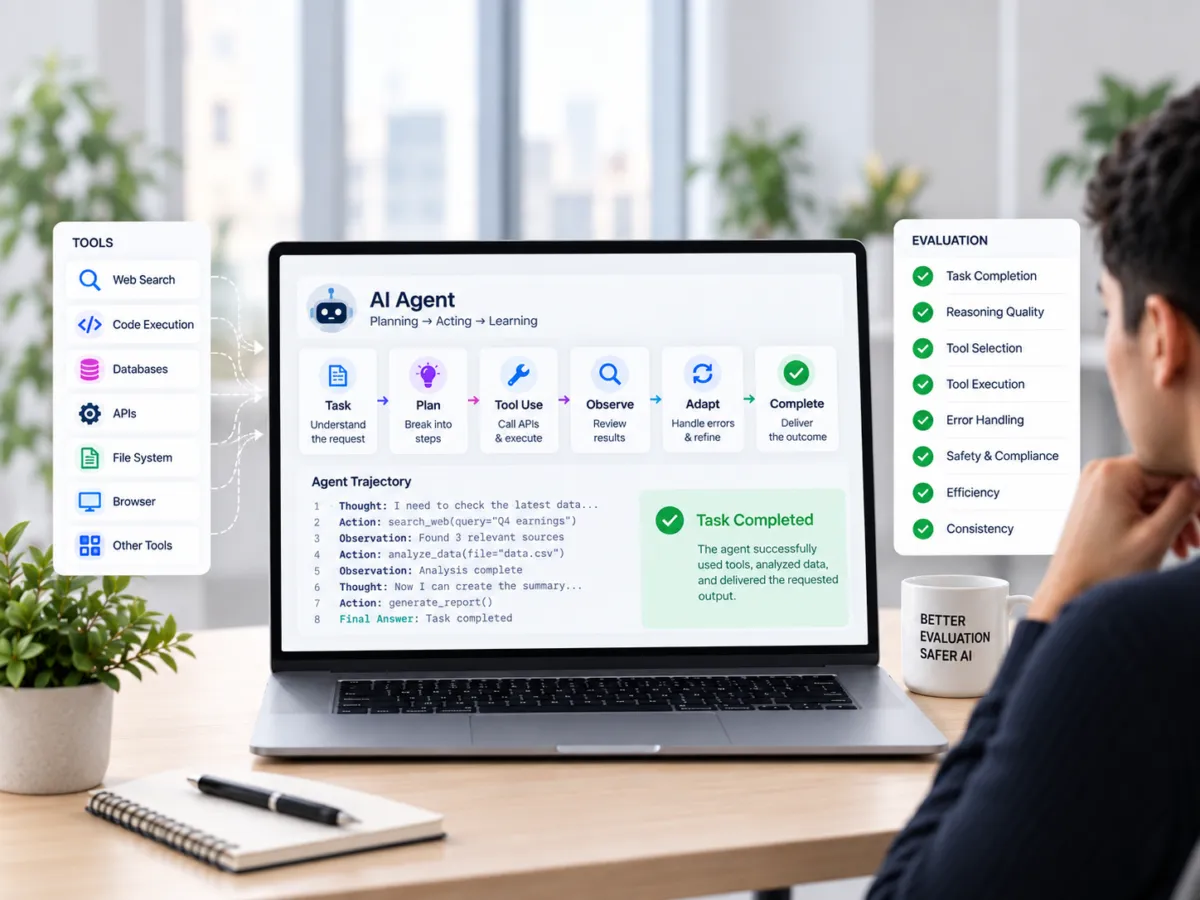
Technical evaluation capabilities are becoming a major differentiator. Evaluate whether a potential partner can support reasoning evaluation, coding-agent evaluation, sandboxed code execution, tool-call evaluation, trajectory auditing, red teaming, multimodal grounding, and robotics evaluation.
Hugo's Omni Evals offering, for example, describes capabilities across perception, speech and audio diarization, multimodal grounding, agentic and coding evaluations, red teaming, and embodied AI.
Ask Whether the Evaluators Can Execute the Task
For technical evaluations, reviewers may need hands-on capability. Can they run code? Inspect repositories? Use terminals? Evaluate mathematical reasoning? The evaluator profile for frontier model work often looks nothing like traditional annotation.
Evaluate How the Provider Protects Models, Data, and Proprietary Workflows
Security requirements depend on your risk profile. Where is work performed? Who can access the data? How is access provisioned and revoked? Is customer data separated between projects? What retention policies apply? Can projects require specific geographies? For teams handling sensitive model outputs or proprietary evaluation data, a provider with secure operations infrastructure becomes essential.
Consider Model IP, Not Just Source Data
Sensitive information may include unreleased model outputs, prompts, evaluation datasets, benchmark results, safety vulnerabilities, and system instructions. The appropriate security model depends on what contributors will see and what actions they will be permitted to perform. Ownership counts too: routing them through a provider tied to a direct competitor exposes them, the first risk named in Hugo's analysis of the Meta/Scale AI deal, one year on.
"Can You Scale?" Is More Complicated Than Headcount
Evaluate scalability across several dimensions. Volume scaling: Can the provider increase task throughput? Expertise scaling: Can it add qualified specialists without reducing quality? Geographic scaling: Can it support languages or locations required by the project? Complexity scaling: Can it move from straightforward annotation into expert reasoning, coding, multimodal tasks, and red teaming? Speed scaling: How quickly can pilots launch and new task types deploy?
Ask What Happens During Model Iteration
AI projects change quickly. A partner may need to adapt to new rubrics, harder tasks, new failure modes, and rapidly changing volumes. A scalable AI data partner should be able to increase not only volume but also the complexity of the human work as the model improves.
Use a Buyer Scorecard Based on Your Model Program
Rather than relying on generic feature comparisons, build an evaluation framework around your actual requirements. Key areas to score include workforce expertise, training data capability, advanced evaluation support, quality control mechanisms, tool flexibility, security controls, scalability, managed delivery, transparency, and adaptability.
Run a Calibrated Pilot Before Committing
Where possible, evaluate providers using the same task, the same rubric, equivalent dataset slices, and comparable success criteria. Compare output quality, disagreement rates, turnaround, and ability to incorporate feedback.
Don't Optimize on Price Per Label Alone
For simple work, unit economics may dominate. For expert AI evaluation, a low-cost judgment that is incorrect may be worth less than a more expensive but trustworthy one. The goal is not to find the cheapest Scale AI alternative. It is to find the provider whose human expertise and operating model generate the strongest usable signal for your models.
Choose a Human Data Partner Built for the Work Your Models Require
Hugo works with AI teams on managed human data operations, specialist evaluators, AI training data, RLHF, advanced AI evaluation, coding and agentic evals, multimodal evaluation, red teaming, and robotics and embodied AI. We emphasize QA, calibration, and workflow flexibility because that's what frontier model work demands.
If your team is evaluating Scale AI alternatives and wants to compare approaches, we're happy to discuss what's actually working in production for teams with similar requirements.
Scale AI Alternatives FAQs
What is the best alternative to Scale AI?
There is no single best Scale AI alternative for every AI team. The right provider depends on factors such as the type of training data or evaluation required, contributor expertise, quality-control needs, security, existing tools, scale, technical complexity, and whether the organization wants software, a managed workforce, or both.
What should I look for in a Scale AI alternative for data labeling?
For data labeling, evaluate annotation capability, contributor qualification, quality assurance, throughput, multimodal support, workflow flexibility, security, and reporting. Teams working with specialized images, LiDAR, speech, or other technical data should also determine whether the provider can supply reviewers with appropriate domain expertise.
What should I look for in a Scale AI alternative for RLHF?
An RLHF data partner should demonstrate strong preference-data operations, clear evaluation rubrics, reviewer qualification, calibration, quality assurance, adjudication, and access to relevant domain experts. The provider should also be able to adapt the evaluation program as model capabilities and failure modes change.
What is a vendor-neutral AI data annotation partner?
A vendor-neutral AI data partner is one that can support human data or evaluation workflows without requiring every project to operate exclusively through one proprietary platform. Depending on the provider, this may include working inside customer tools, third-party systems, proprietary evaluation environments, sandboxes, or API-based workflows.
How should AI teams compare data annotation and evaluation companies?
AI teams should compare providers using the actual requirements of their model program rather than a generic feature list. Important criteria include workforce expertise, QA, technical evaluation capability, tool flexibility, security, scalability, transparency, and managed delivery. A calibrated pilot can provide stronger evidence than marketing claims alone.
When does a specialized AI evaluation partner make sense?
A specialized evaluation partner can make sense when model evaluation requires expertise beyond straightforward labeling, such as coding, mathematical reasoning, agent trajectories, red teaming, multimodal grounding, or robotics. In these cases, the provider's ability to recruit and manage technically qualified evaluators becomes a major selection criterion.