Speaker Diarization Answers "Who Spoke When?"
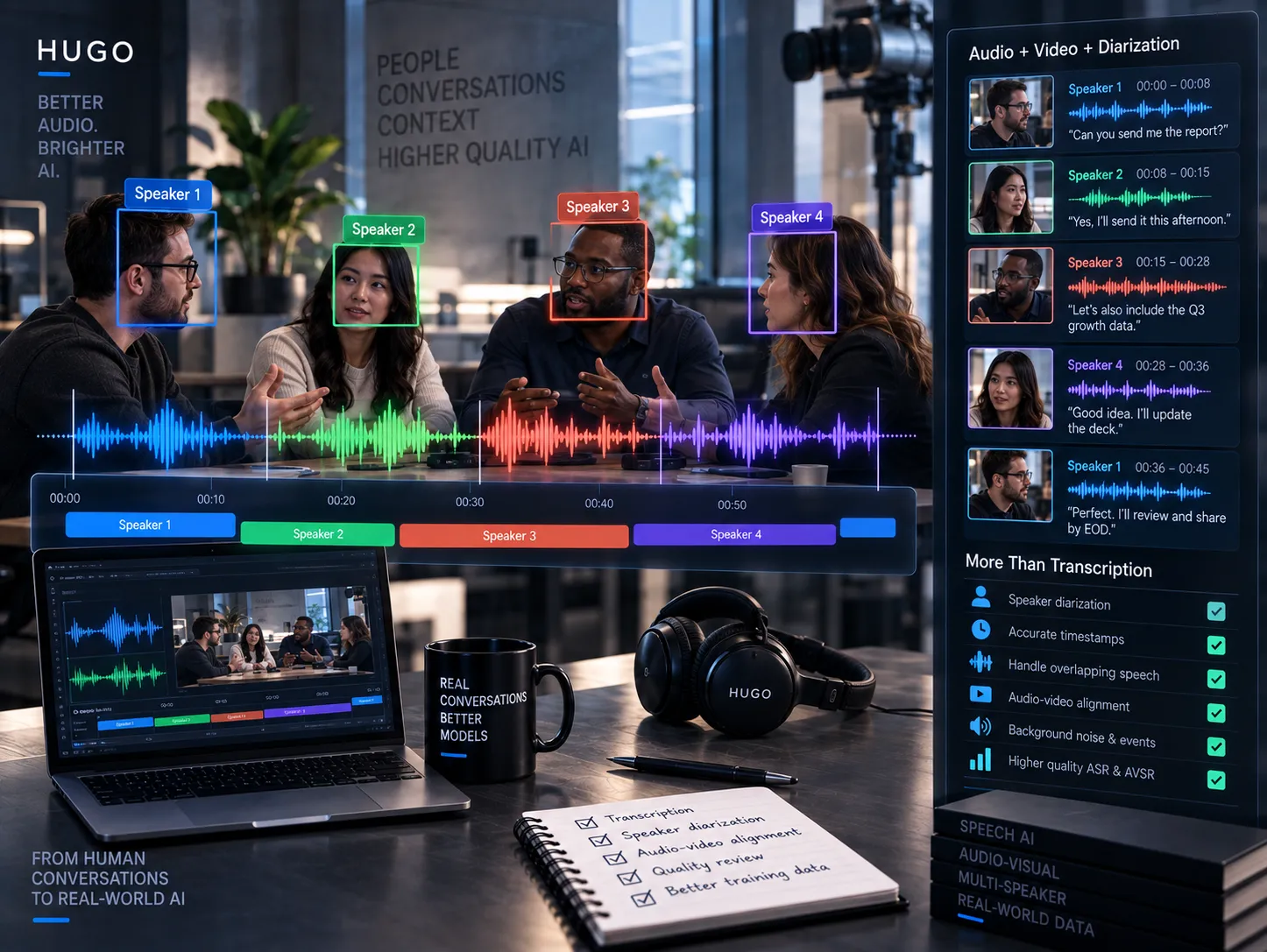
Speaker diarization segments speech by speaker so an AI system can determine which voice is talking during different portions of an audio recording. A simple diarized transcript might look like this:
Speaker A. 00:00. 00:04
"Can you send me the report?"
Speaker B. 00:04. 00:07
"Yes, I'll send it this afternoon."
That structure seems obvious when you read it. But producing it reliably at scale requires careful annotation work.
Transcription asks: What was said? Diarization asks: Who was speaking when it was said? The two are often combined in speech datasets, but they are distinct tasks. Labels like "Speaker 1" and "Speaker 2" distinguish voices without establishing real-world identities. Diarization segments and tracks voices across a conversation without revealing who those speakers actually are.
Speech Recognition Needs More Than Words in Multi-Speaker Audio
Automatic speech recognition (ASR) converts spoken language into text. ASR annotation may include verbatim transcription, timestamps, utterance boundaries, punctuation, language labels, non-speech sounds, and speaker labels. Teams building speech and audio diarization datasets typically combine several of these layers.
Without diarization, a transcript reads like a wall of text. With diarization, the same audio becomes structured. This distinction matters for meetings, interviews, call recordings, and any multi-party interaction where knowing who said what changes the meaning.
Speaker boundaries should align correctly with speech onset, speech end, and speaker changes. If a boundary drifts by half a second, the wrong speaker may be credited with the wrong utterance. For training data, that's noise that degrades model performance. Recent benchmarks like Indic DiarBench, which covers 108 hours of multi-speaker audio across 22 Indian languages with human-corrected speaker-attributed transcriptions, demonstrate how precise temporal alignment and speaker attribution are foundational for high-quality multilingual ASR training data.
Real Conversations Rarely Contain Perfectly Separated Speech
The harder the acoustic environment, the more annotation quality matters. Challenges include:
- Overlapping speech: Two or more people speak simultaneously.
- Background noise: Music, traffic, machinery, crowds, room noise.
- Similar voices: Multiple speakers may have acoustically similar voices.
- Off-camera speakers: A voice may be audible even though the person is not visible.
- Changing acoustic conditions: A speaker may move closer to a microphone or turn away.
The Sortformer research on integrated diarization-ASR systems combined over 7,000 hours of speaker-attributed training data from both real and synthetic sources. That scale reflects how much variety is needed to train systems that handle realistic acoustic conditions.
A simple timeline that assumes only one speaker at a time does not accurately represent real conversations. Annotation systems need to handle simultaneous speakers without forcing the data into a one-voice-at-a-time structure.
Diarization Data Requires Accurate Speaker and Time Relationships
Depending on the project, annotation may include speaker segments, consistent speaker labels, start and end timestamps, speaker turns, overlapping speech markers, and non-speech regions (silence, music, environmental noise).
One recurring QA issue is speaker label drift. A person labeled Speaker A early in a recording should not later become Speaker C unless the annotation system intentionally supports that change. Inconsistent labels create training data where the model cannot learn to track speakers reliably.
Video Adds Visual Evidence About Who Is Speaking
Audio-visual diarization combines acoustic and visual signals to help determine which person is speaking at a given time. Visual information may include visible faces, face tracks, mouth movement, body position, and scene context.
Research on multimodal speaker diarization demonstrated 3.8% relative improvements in diarization error rate when integrating audio, visual, and semantic information. In competitive benchmarks, those margins matter.
Visual speaker tracking follows visible people across video frames so their visual identity can remain associated with relevant audio and speech segments over time. This is more than detecting faces in individual frames. The dataset must preserve identity across movement, camera cuts, partial occlusion, and changing angles.
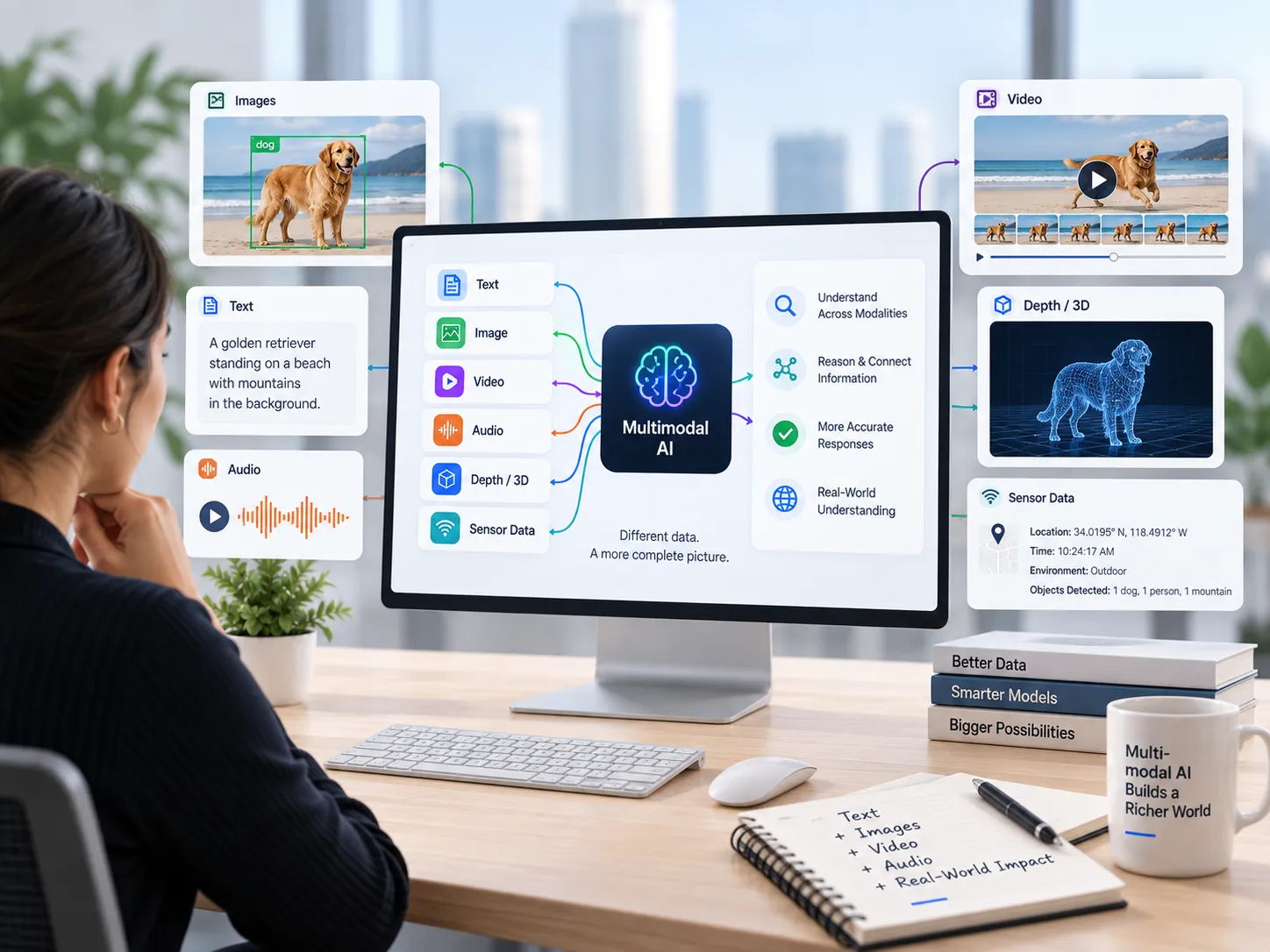
Active-speaker annotation identifies which visible person is speaking during a particular time interval. A visible person is not automatically the active speaker. Someone may be listening, moving their mouth silently, or visible while another off-camera person speaks. This connects directly to multimodal grounding work, where AI systems learn to associate information across different modalities.
Audio and Visual Signals Must Correspond at the Right Time
Audio-visual speech recognition (AVSR) uses both acoustic and visual information to recognize speech. Visual information may help a model interpret speech when background noise is high, several speakers are present, or audio is partially degraded.
The MuAViC corpus provides 1,200 hours of transcribed audio-visual speech from over 8,000 speakers across 9 languages. That scale requires precise alignment between what you hear and what you see.
"Audio-video alignment errors are subtle but destructive. A half-second drift might look fine in a spot check, but it teaches the model the wrong relationship between what it sees and what it hears. You need systematic verification, not just random sampling."
Omorebokhae Sunny Ohimai, Project Manager, AI Operations
Depending on the task, alignment may connect speaker to voice, face track to speech segment, mouth movement to utterance, or visual event to acoustic event. Teams working on perception and annotation need to understand which level of alignment a given project requires.
Speech Models May Need to Understand What Else Is Happening in the Audio
Not every important sound is speech. Acoustic-event annotation may identify door closing, applause, laughter, coughing, music, vehicle noise, alarms, and environmental sounds.
Background sound may interfere with speech, provide scene context, or help explain what is happening visually. For multimodal systems, an acoustic event may also correspond to a visible event. A door closing on video should match the closing sound in audio. A dataset that strips out all non-speech audio removes context that might help a model understand what's happening in a scene.
Strong Audio-Visual Datasets Need Variation
Dataset coverage may include variation in number of speakers, speaking styles, accents and languages, camera angles, distance from camera, audio quality, lighting, occlusion, and overlapping speech.
Useful AVSR datasets should not consist entirely of front-facing speakers, clean audio, one person at a time, and perfectly synchronized recordings. If the target deployment includes difficult conditions, the training and evaluation data should represent them.
Research on audio-visual speaker tracking showed up to 69.7% improvement on multi-object tracking tasks when fusing audio and visual modalities. Those gains come from handling the hard cases that single-modality systems struggle with.
QA Must Check Audio, Video and the Alignment Between Them
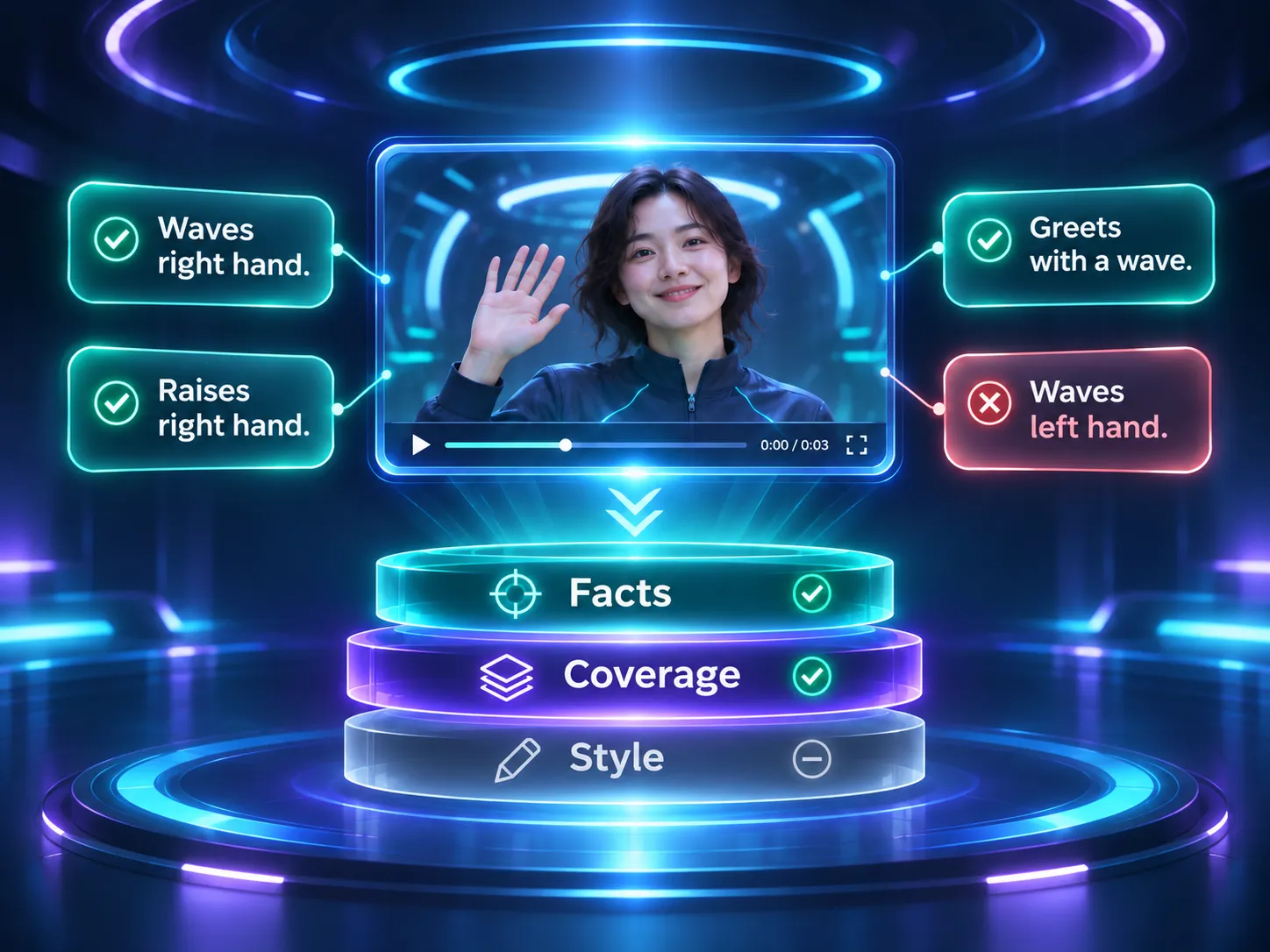
Quality assurance for diarization and audio-visual annotation spans multiple layers: speaker consistency, boundary accuracy, transcript accuracy, overlap accuracy, visual identity consistency, active-speaker accuracy, audio-video synchronization, and acoustic event accuracy.
Human reviewers resolve cases involving similar voices, occluded speakers, rapid turn-taking, overlapping speech, and off-screen speech. Teams working with multilingual reviewers can handle accent variation and language-specific challenges that automated systems miss.
Automation may identify overlapping timestamp errors, impossible segment boundaries, missing labels, and invalid formats. The combination of automated checks and human review produces the most reliable results.
Speech AI Data Partners Need Both Audio and Multimodal Capabilities
For teams evaluating a provider, relevant capabilities include ASR annotation, speaker diarization, transcription, timestamp annotation, overlapping speech labeling, visual speaker tracking, active-speaker annotation, audio-visual diarization, acoustic-event annotation, multilingual reviewers, audio-video alignment, and QA adjudication.
Questions worth asking: How are simultaneous speakers labeled? How are speaker identities kept consistent? How is audio-video synchronization verified? How are uncertain transcripts escalated?
For multimodal projects, a provider may produce accurate transcripts while still misaligning speakers, faces, timestamps, and events. Understanding what high-quality training data looks like means evaluating the relationships between annotation layers, not just each layer in isolation.
Build Speech Data That Preserves Speaker, Context and Timing
If your team is working on speech AI, AVSR, or multimodal models and wrestling with diarization quality, alignment accuracy, or scaling annotation for multi-speaker environments, we're happy to compare notes. Hugo provides speaker diarization annotation services, ASR annotation, visual speaker tracking, active-speaker annotation, acoustic-event labeling, and the multilingual human review and QA that multimodal speech datasets require.
Speaker Diarization and AVSR FAQs
What is speaker diarization annotation?
Speaker diarization annotation identifies who is speaking and when within an audio recording. Annotators divide speech into time segments and assign consistent speaker labels, allowing AI systems to distinguish different voices across conversations, meetings, interviews, and other multi-speaker environments.
What is the difference between transcription and speaker diarization?
Transcription identifies what was said, while speaker diarization identifies which speaker said it and when. The two tasks are often combined in speech datasets so each transcribed utterance can be associated with the correct speaker and time interval.
What is audio-visual diarization?
Audio-visual diarization combines acoustic and visual information to determine who is speaking over time. Training data may connect voices with visible speaker tracks, active-speaker labels, timestamps, and transcripts so models can use both sound and visual context in multi-speaker environments.
What is AVSR training data?
AVSR training data is multimodal data used for audio-visual speech recognition, combining speech audio with corresponding visual information such as a speaker's face or mouth movements. High-quality AVSR datasets require accurate transcription, timing, speaker relationships, visual tracking, and audio-video synchronization.
How is overlapping speech annotated?
Overlapping speech annotation represents periods when two or more speakers talk simultaneously rather than forcing the audio into one-speaker-at-a-time segments. The exact labeling format varies by project, but preserving simultaneous speaker activity is important for realistic diarization and multi-speaker speech data.
Why is human review important for speaker diarization?
Human review helps resolve ambiguous speaker turns, overlapping speech, similar voices, off-screen speakers, background noise, and audio-video mismatches that automated systems may misinterpret. Reviewers can also verify speaker consistency and determine whether visual and acoustic signals correspond to the same person and time period.